The Rise of XaaS: How Subscription IT Services Are Changing Business Operations for SMEs
Jul 10, 2025
5 min read
Agility and scalability are no longer luxuries reserved for large enterprises. The rapid expansion of Everything-as-a-Service (XaaS) is democratising access to enterprise-grade technology, making powerful tools available to small and medium-sized enterprises (SMEs) through predictable, subscription-based models. From AI-as-a-Service to Security-as-a-Service and Infrastructure-as-a-Service, XaaS is transforming how SMEs operate, compete, and grow, particularly in regions like the South East of England.
This blog explores how XaaS is reshaping IT services, why it's ideal for SMEs, and what growing businesses in Essex and surrounding areas need to know about getting started.
What is XaaS?
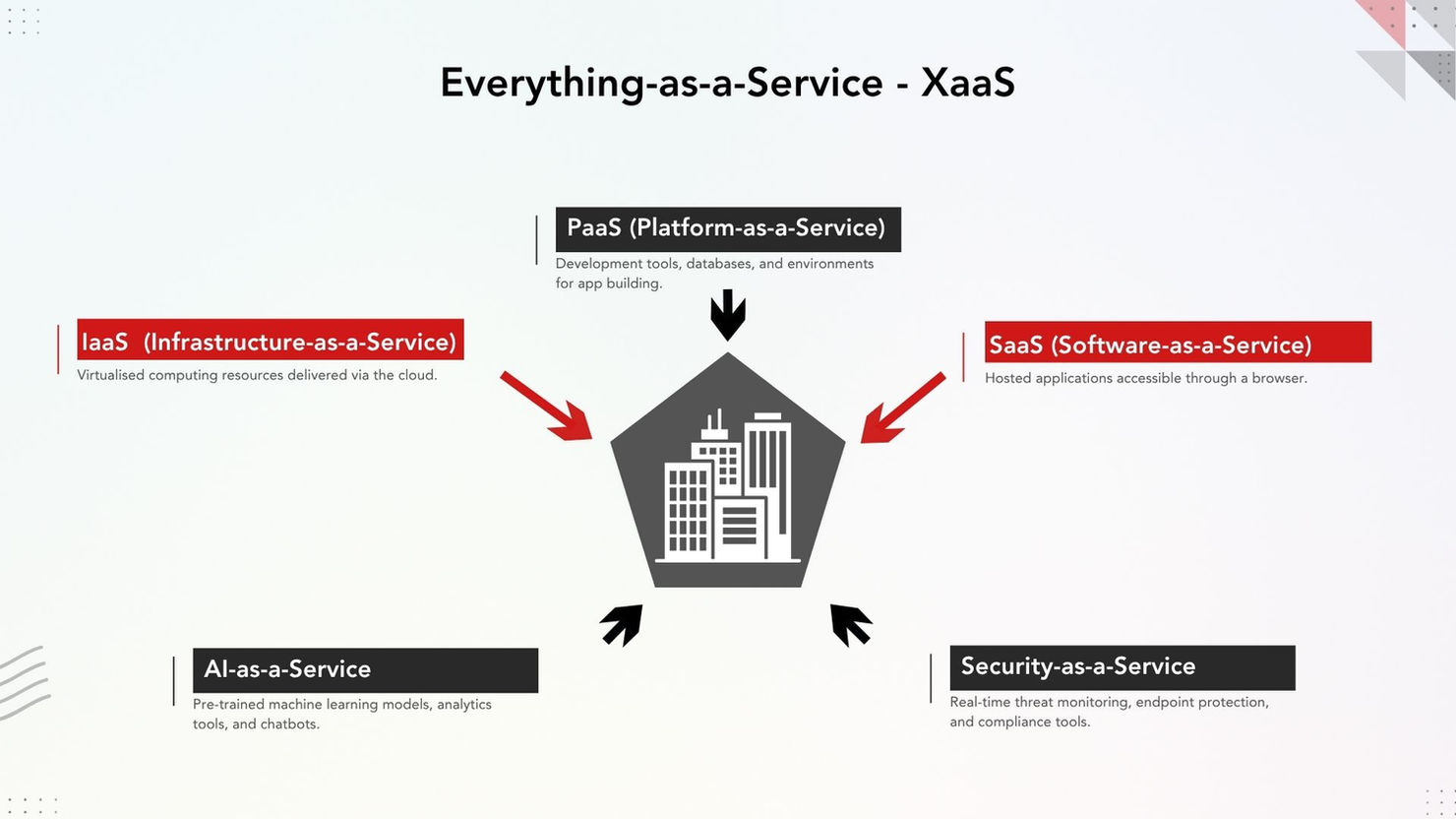
Everything-as-a-Service, or XaaS, refers to the broad delivery of IT services and solutions over the internet via subscription. Originally driven by the popularity of Software-as-a-Service (SaaS), the model now encompasses a wide array of offerings:
- IaaS (Infrastructure-as-a-Service): Virtualised computing resources delivered via the cloud.
- PaaS (Platform-as-a-Service): Development tools, databases, and environments for app building.
- SaaS (Software-as-a-Service): Hosted applications accessible through a browser.
- AI-as-a-Service: Pre-trained machine learning models, analytics tools, and chatbots.
- Security-as-a-Service: Real-time threat monitoring, endpoint protection, and compliance tools.
The appeal of XaaS lies in its flexibility. Rather than making large capital investments in hardware and software, businesses can adopt services on a pay-as-you-go basis, shifting IT expenditure from CapEx to OpEx. This allows for easier budgeting, faster deployment, and more resilience during periods of change or uncertainty.
The UK SME Landscape and the Rise of XaaS
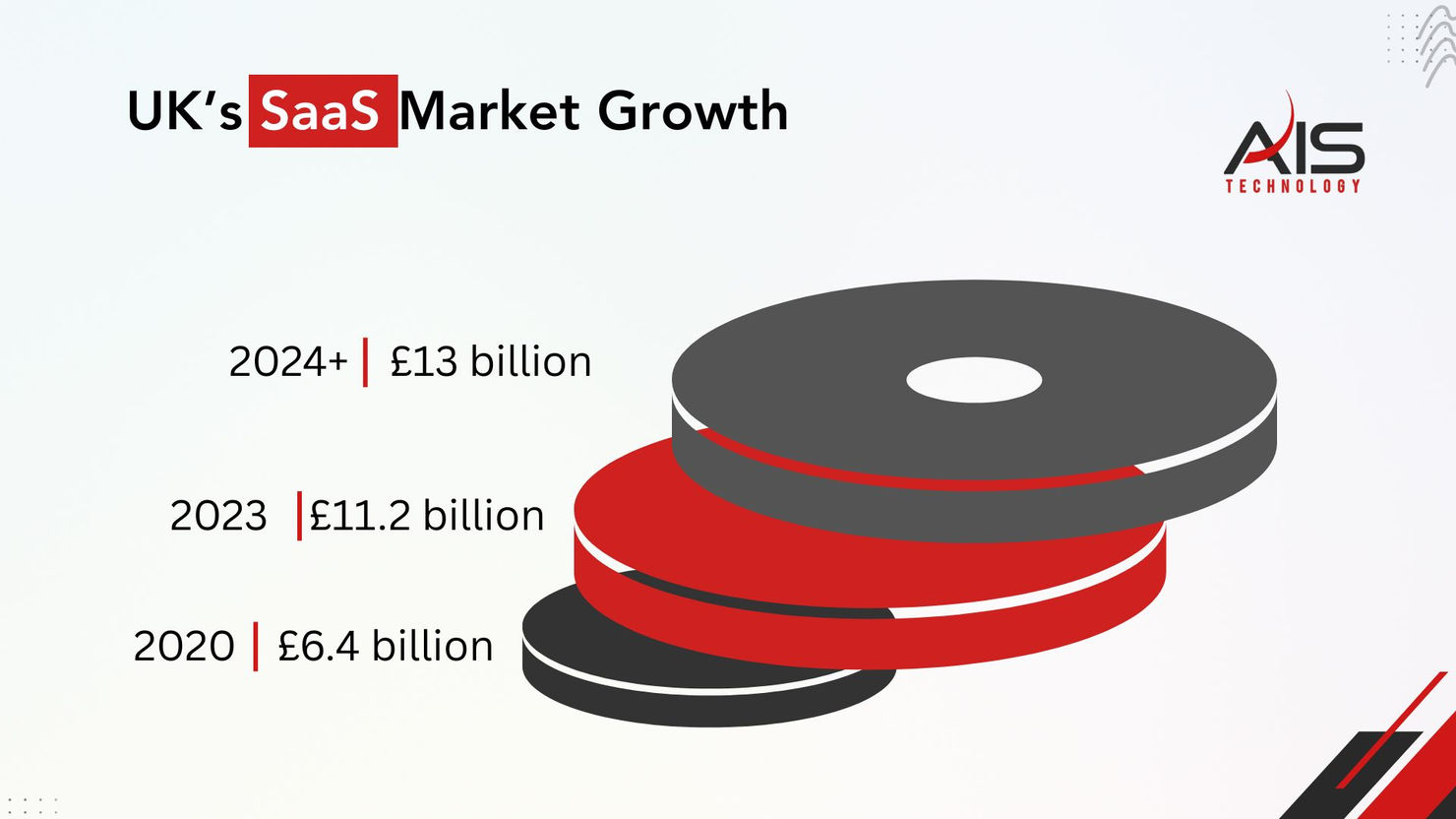
The UK's SaaS market has grown quickly since 2020. Adoption of AI by UK firms has also surged: research by the British Chambers of Commerce and Atos found 54% of firms actively using AI in 2026, up from 25% in 2024 [1].
Airwallex's round-up of UK small business statistics reports that 90% of UK SMEs grew their business in 2024, with an average increase of 27%. Notably, 70% planned to upskill their workforce in 2025, and 88% were optimistic about the year ahead [2]. Meanwhile, a Startups.co.uk survey found that 82% of UK businesses feel pressure to adopt emerging technologies [3].
SMEs in the South East are especially well-placed to embrace digital transformation. With high regional connectivity, access to local IT support companies, and a thriving ecosystem of managed service providers, the conditions are ideal for leveraging XaaS.
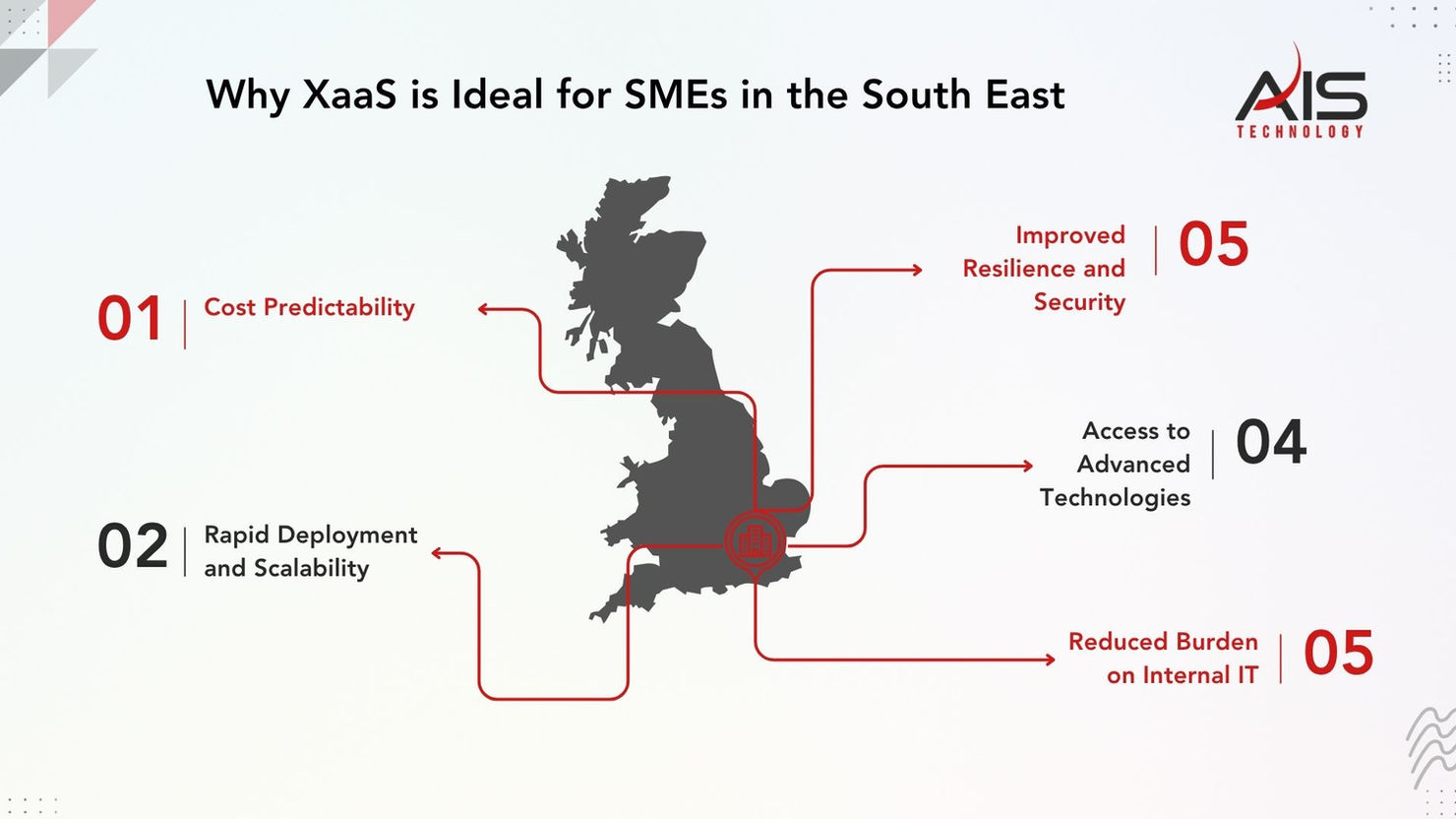
Why XaaS is Ideal for SMEs in the South East
For SMEs in Essex and the broader South East, XaaS presents several compelling advantages:
-
Cost Predictability With XaaS, businesses pay a fixed monthly fee, avoiding upfront costs and surprise expenses. This predictability is crucial for SMEs managing tight margins or uncertain cash flow.
-
Access to Advanced Technologies Services such as AI chatbots, intrusion detection systems, and scalable cloud storage are now accessible to SMEs without the need for in-house specialists or extensive infrastructure.
-
Rapid Deployment and Scalability Businesses can deploy services in days rather than months. Whether expanding a team, launching a new product, or shifting to hybrid working, XaaS makes scaling seamless.
-
Reduced Burden on Internal IT By outsourcing monitoring, maintenance, and updates, internal IT teams can focus on strategic projects, not firefighting.
-
Improved Resilience and Security Many XaaS providers offer built-in compliance and cybersecurity, helping SMEs protect data and meet GDPR obligations.
Popular XaaS Solutions for SMEs
- Security-as-a-Service: With 43% of UK businesses identifying a breach or attack in the past year, according to the Cyber Security Breaches Survey 2025/2026 [4], Security-as-a-Service is a priority. Services include 24/7 threat detection, firewalls, multi-factor authentication, and endpoint protection.
- AI-as-a-Service: SMEs can tap into machine learning tools for customer support (e.g., chatbots), predictive analytics, and automation without hiring data scientists.
- IaaS and PaaS: Rather than purchasing servers or licensing on-premise software, SMEs can access computing power and development tools via providers like Microsoft Azure or AWS.
- Backup-as-a-Service (BaaS) and Disaster Recovery-as-a-Service (DRaaS): Ensure data continuity without investing in secondary infrastructure.
- Unified Communications-as-a-Service (UCaaS): Integrate phone, video, chat, and collaboration tools under a single, cloud-based platform.
Return on Investment and Productivity Gains
SMEs that adopt XaaS report:
- Higher Productivity: AI-driven tools help automate tasks like customer support and reporting.
- Faster Innovation: Developers can build and test applications quickly using cloud environments.
- Stronger Cyber Resilience: With managed patching, updates, and monitoring, risks are reduced.
- Reduced IT Costs: Lower infrastructure and maintenance costs, predictable subscriptions.
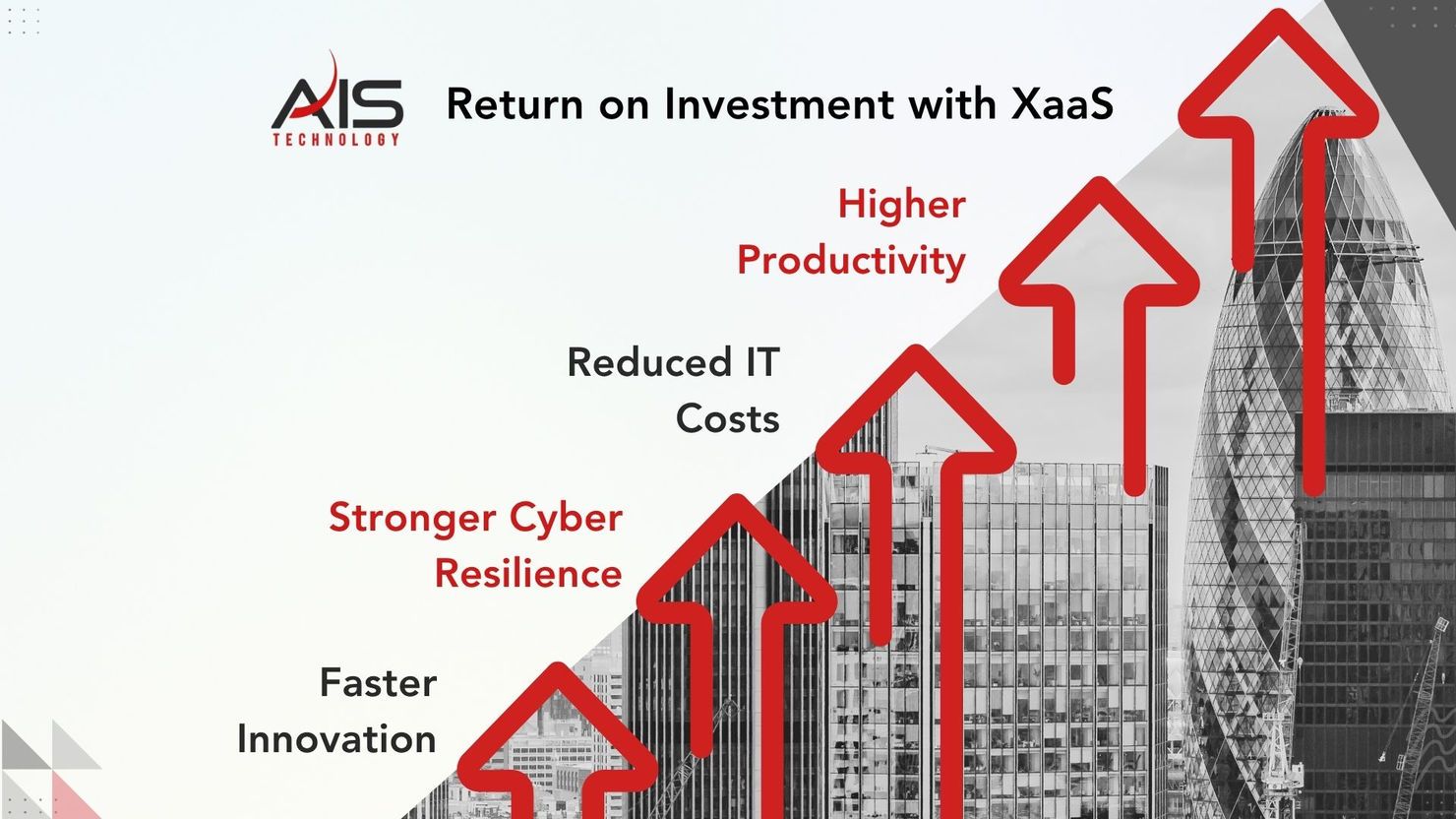
Moving to XaaS replaces large upfront purchases with a predictable monthly cost, while improving uptime and security. This allows them to compete more effectively with larger firms.
Challenges and How to Overcome Them
While XaaS offers significant benefits, SMEs may encounter obstacles:
- Budget Sensitivity: Some subscription fees can grow over time. Choose providers with clear SLAs and pricing structures.
- Skill Gaps: Many SMEs lack in-house expertise. Managed IT support services, such as those offered by AIS, can bridge the knowledge gap.
- Change Management: Staff may resist new tools. Training and phased rollouts can ease transitions.
- Security and Compliance: Ensure providers are GDPR-compliant and have necessary certifications (ISO 27001, Cyber Essentials, etc).
Steps for SMEs in Essex to Get Started with XaaS
-
Audit Existing Infrastructure Identify outdated systems, security gaps, and areas for optimisation.
-
Define Business Goals Are you looking to improve customer experience? Reduce downtime? Scale quickly? This defines which XaaS options to prioritise.
-
Partner with a Local IT Support Company Managed IT support services, like those provided by AIS Technology in Essex, offer tailored guidance, 24/7 monitoring, and rapid support.
-
Start Small and Scale Begin with one or two services (e.g. email security, cloud backup), measure impact, then expand.
-
Ensure Ongoing Review Technology evolves. Regularly review contracts, performance metrics, and service outcomes.
Case Study: South East SME Success with XaaS
A Chelmsford-based e-commerce retailer partnered with a managed IT support company to implement Security-as-a-Service and cloud backup. Within six months, they:
- Reduced internal helpdesk tickets by 40%.
- Improved website uptime from 96.5% to 99.9%.
- Cut ransomware risk through 24/7 endpoint protection.
They later expanded into AI-as-a-Service, deploying a chatbot to handle routine customer queries, resulting in faster response times and improved customer satisfaction.
Looking Ahead: The Future of XaaS
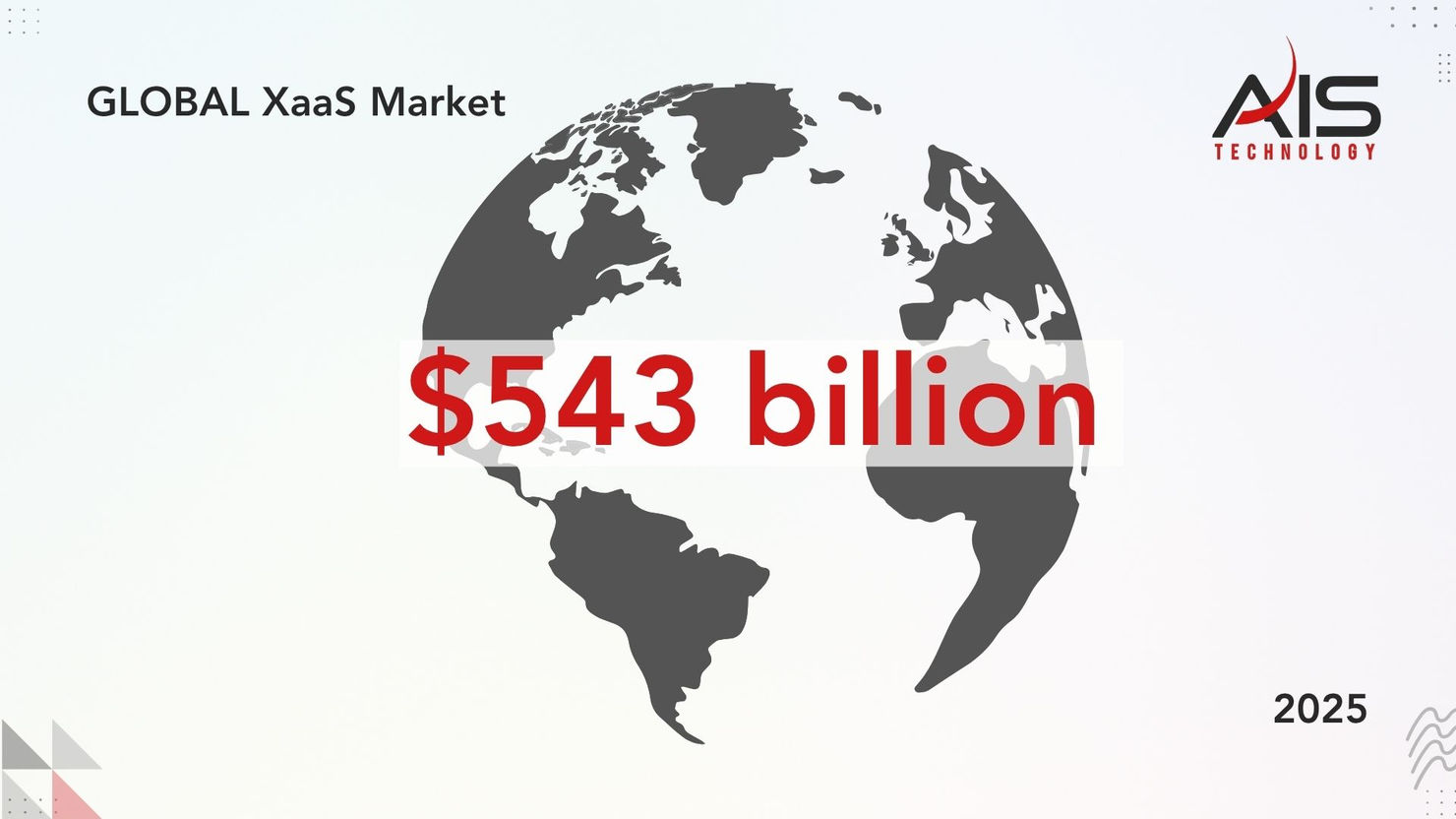
The global XaaS market is expected to keep growing, with vertical-specific services (e.g. Healthcare-as-a-Service, Fintech-as-a-Service) seeing significant momentum.
With high digital maturity, robust broadband infrastructure, and a concentration of innovative SMEs, the South East is well-positioned to lead this transformation.
SMEs that embrace subscription-based IT services will not only keep pace with change, but also unlock new capabilities to grow, compete, and thrive in the years ahead.
The Time for XaaS is Now
Everything-as-a-Service is not a future trend; it's today's competitive edge. For SMEs across Essex and the South East, XaaS represents a powerful toolset for resilience, flexibility, and innovation.

By working with a trusted IT support company like AIS Technology, growing businesses can confidently navigate the transition to XaaS and reap the rewards of scalable, secure, and smart IT services & consulting.
If you're ready to explore how managed IT support and subscription services can transform your business, contact AIS today for a tailored consultation.
References
[1] British Chambers of Commerce and Atos, AI adoption research, via the University of Essex, "Major jump in tech adoption as study finds half of SMEs using AI"
[2] Airwallex, "Small Business Statistics UK"
[3] Startups.co.uk, "Small Businesses Embrace New Technology"
[4] DSIT, Cyber Security Breaches Survey 2025/2026
Tags: Business IT Support, Cyber Security, Essex, London, Xaas, SaaS, AI, PaaS, Security, South East
Categories: IT Services, IT Managed Service